
PREVENTIVE STRENGTH TRAINING
EMS Training in Calicut
Muscle activation for strength, posture, and mobility.
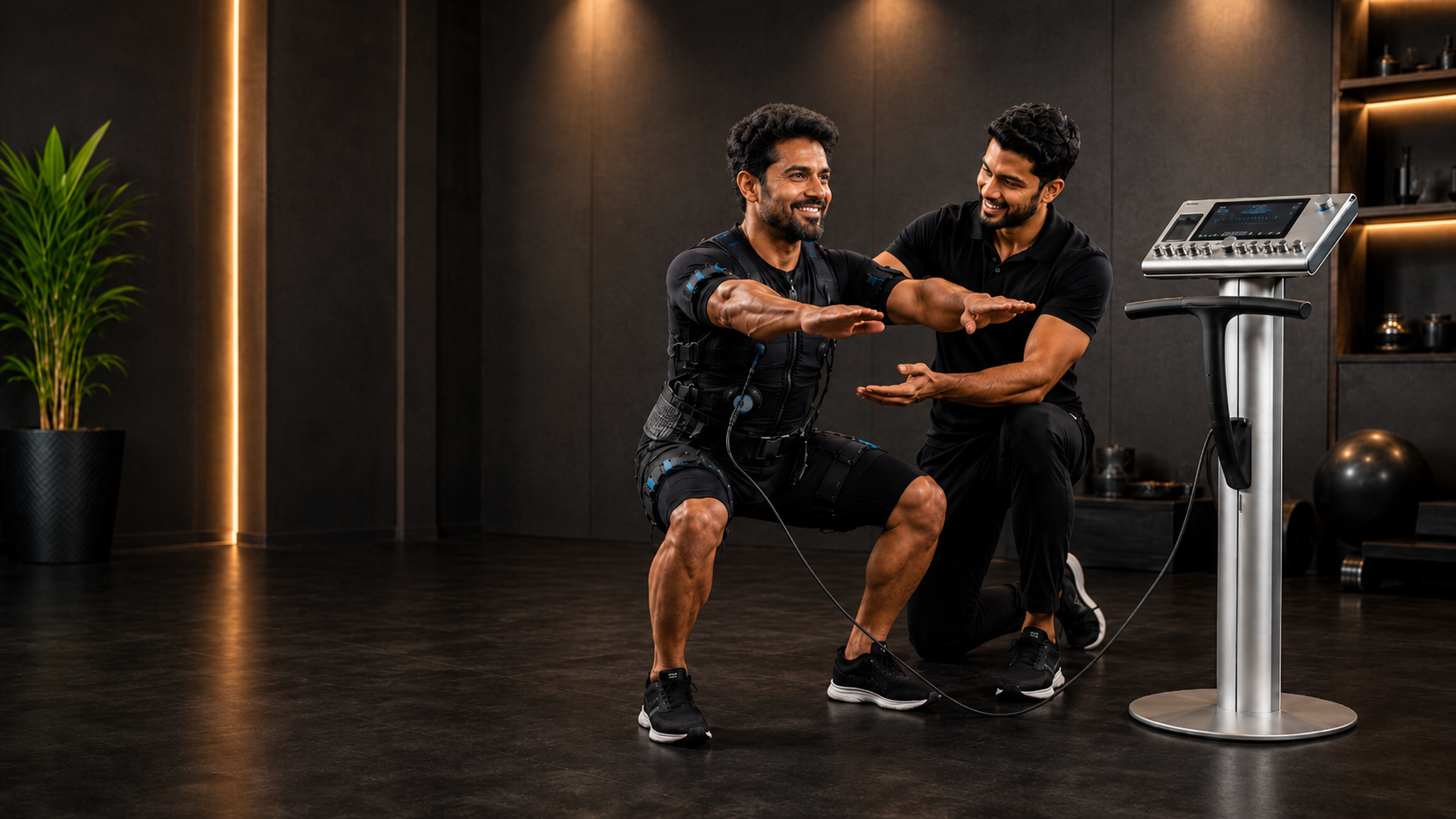
Whole-Body EMS uses controlled low-frequency impulses to activate major muscle groups while you perform simple guided movements.
20-minute guided sessions • Trainer-led • Low-impact movement
What is Whole-Body EMS Training?
Electromyostimulation, or EMS, is a specialised training method that uses gentle low-frequency impulses to help muscles contract while you perform simple guided movements. At Lyxaa in Calicut, EMS is used as a support tool for strength, posture, mobility, and muscle preservation.
Gentle electrical impulses
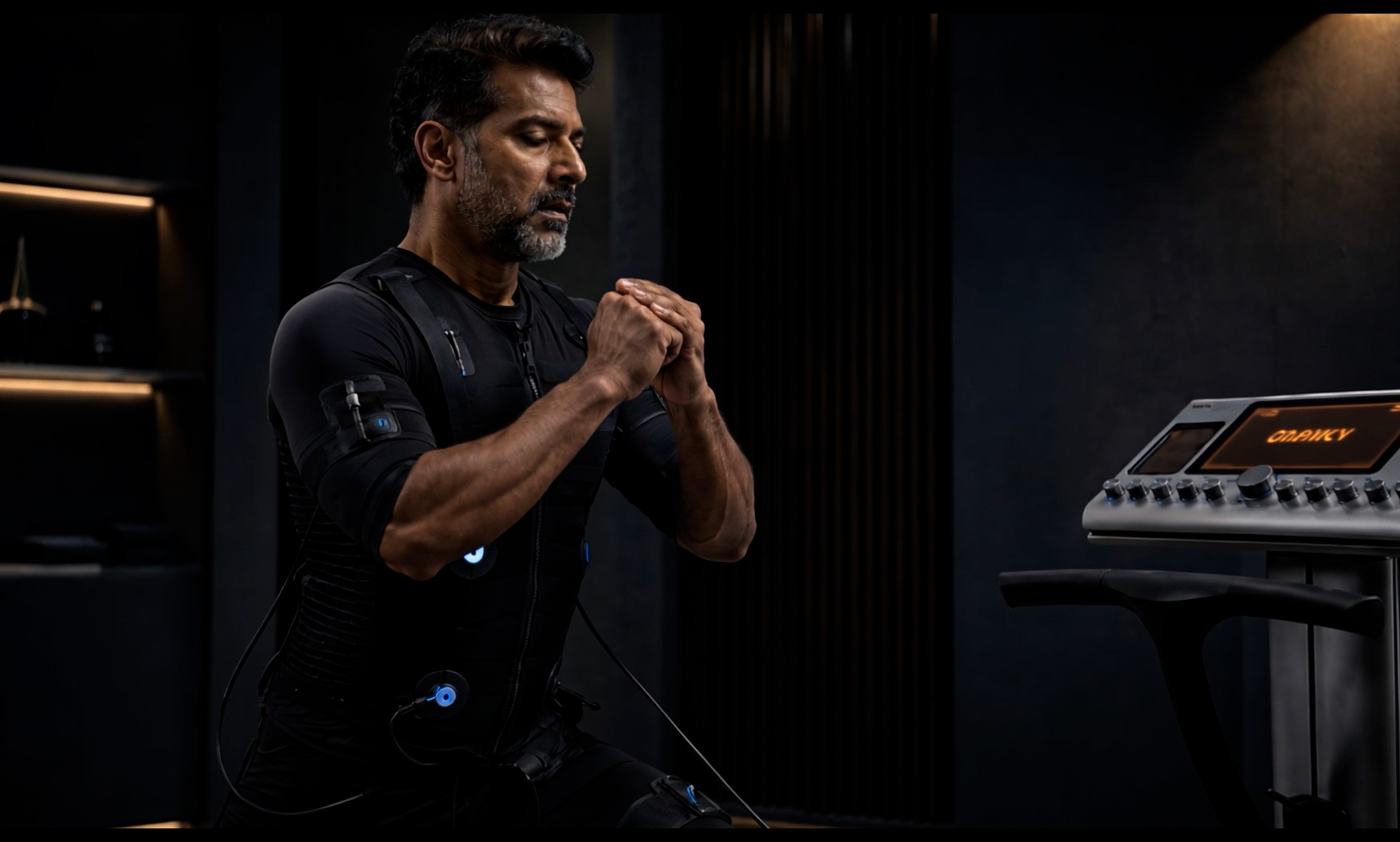
Low-frequency impulses are delivered through electrodes built into the EMS suit.
Muscle contraction
These impulses mimic the body’s natural nerve signals, helping muscles contract during movement.
Guided movement
EMS is combined with simple bodyweight movements so the session stays functional, and controlled.
Why you'll love EMS Training
EMS is used at our Kozhikode facility as a support method for muscle activation, functional strength, posture, and age-related muscle preservation.
Muscle strength support
Supports functional strength by helping activate major muscle groups during guided movement.
Muscle preservation with age
May help support lean muscle and mobility as muscle strength naturally declines with age, helping combat sarcopenia.
Back & posture support
Helps activate trunk and stabilising muscles that support posture, often beneficial for managing non-specific back pain.
Low-impact training
Provides muscle activation without relying on heavy external weights, making it easier on the joints.
Time-efficient sessions
A typical EMS session is around 20 minutes, with additional time for setup and review.
Body composition support
Can support body-composition goals when combined with nutrition, movement, and lifestyle guidance.
Perfect for your lifestyle
A low-impact starting point tailored to your personal goals and comfort.
Busy professionals
A structured, time-efficient session for people who struggle to maintain a regular exercise routine.
Adults above 16
Supports strength, mobility, and functional muscle health as the body ages.
Beginners
A starting point for people who feel uncomfortable or unsure in a normal gym.
Back or posture concerns
May support trunk activation and posture-focused movement under trainer supervision.
Weight-loss clients
Helps support lean muscle while working on fat-loss or body-composition goals.
Low-strength or deconditioned clients
Gradual activation without heavy external loads, based on individual readiness.
How an EMS Session Works
From screening to guided movement, every step is adjusted for comfort, safety, and progress.
Step 01
Screening & readiness check
We review your health history, fitness level, pain points, goals, and safety considerations before starting.
Step 02
Suit fitting
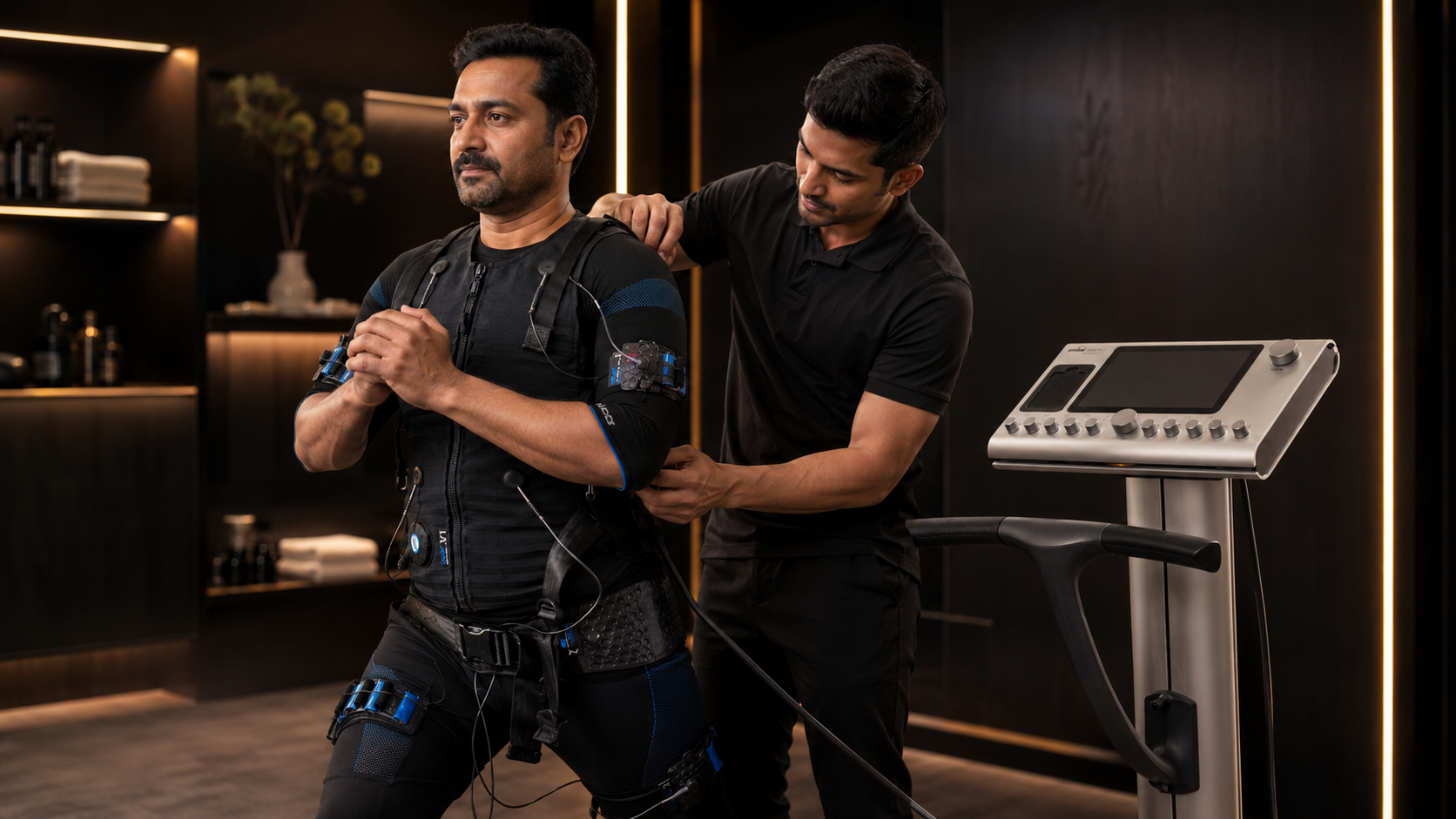
You are fitted with a specialised EMS suit with integrated electrodes and connection points.
Step 03
Impulse adjustment
The trainer gradually calibrates intensity across major muscle groups based on your comfort and response.
Step 04
Guided movement session
You perform simple, functional movements while EMS supports muscle activation.
Step 05
Progress review
Comfort, recovery, movement quality, and next-session intensity are reviewed by the care team.
EMS should be guided.
EMS should be used with proper screening, gradual intensity adjustment, and trained supervision. At Lyxaa, every session is personalised based on medical history, comfort, movement quality, and recovery.
Medical-history screening
Before starting, we check suitability and relevant health conditions.
Gradual intensity adjustment
Intensity is increased slowly based on comfort and response.
Trainer supervision
A trainer monitors posture, movement, and comfort throughout the session.
Recovery review
Hydration, comfort, recovery, and next-session intensity are reviewed.
Start with a EMS session.
Book a Lyxaa EMS session to understand your suitability, comfort level, and training plan.
Common questions about EMS
Is EMS painful?+
No. Most people feel a tingling or pulsing muscle contraction. The intensity is adjusted gradually based on comfort.
Is EMS safe?+
EMS is generally well tolerated when used with proper screening, certified equipment, and trained supervision. Suitability depends on health history.
Who should avoid EMS?+
People with pacemakers or implanted electronic devices, pregnancy, seizure disorders, serious heart conditions, acute illness, recent surgery, or major uncontrolled medical conditions should avoid EMS or take medical clearance first.
Is EMS only for weight loss?+
No. EMS is mainly used for muscle activation, strength support, posture support, and muscle preservation. Body composition support can be an additional benefit.
Can EMS help after 50?+
EMS may support muscle activation, strength, mobility, and functional muscle health as the body ages, especially when progressed safely.
Can EMS support back and posture?+
EMS can help activate trunk and stabilising muscles during guided movement. It may support posture and back comfort, but it is not a replacement for medical treatment.
How long is one EMS session?+
The active EMS training portion is typically around 20 minutes, with additional time for suit setup, intensity adjustment, and review.
How often should I do EMS?+
Many EMS programmes use one session per week. The right frequency depends on goals, recovery, and trainer assessment.
Do I need exercise experience?+
No. Sessions are guided and can be adjusted for beginners, low-strength clients, and people who prefer a guided environment.
How does EMS work? (Simple explanation)+
EMS uses gentle low-frequency impulses through a specialised suit to activate muscles while you perform simple guided movements. It is designed to create muscle activation with lower joint stress compared with heavy external loading.
How does EMS work? (Scientific explanation)+
EMS impulses are delivered through electrodes in the suit. These impulses stimulate motor nerves and trigger brief muscle contractions. In Whole-Body EMS, multiple major muscle groups can be activated during the same session while the client performs guided movement.
Why is movement included in EMS sessions?+
At Lyxaa, EMS is not used as a passive shortcut. The impulses are combined with guided movements so the session supports functional strength, posture, coordination, and movement quality.
What is the difference between Whole-Body and Local EMS?+
Local EMS usually targets one specific muscle or area. Whole-Body EMS uses a suit-based system to activate several major muscle groups together, such as the legs, trunk, back, arms, and chest.
Responsible EMS, not exaggerated promises
At Lyxaa, EMS is not presented as a shortcut, cure, or replacement for all exercise. It is used as a support method for muscle activation, movement, strength, posture, and long-term functional health.
CAUTION: EMS may not be suitable for everyone. People with pacemakers or implanted electronic devices, pregnancy, seizure disorders, serious heart conditions, recent surgery, acute illness, severe kidney disease, open wounds near electrode areas, or major uncontrolled medical conditions should avoid EMS or take medical clearance first.